I was catching up with a friend recently who, like me, retired early. As we talked about how life was going, she shared that she’s been feeling quite unproductive lately. She has a mountain of things on her to-do list, but somehow just can’t bring herself to tackle them. And then she feels guilty about not getting them done.
The ironic thing is, she isn’t doing nothing. She’s actually enjoying spending time training for a race, getting massages, and being there for her child. These are the very things she wants to prioritize in retirement. Somehow, spending time on what matters most to her still doesn’t seem to count as productive enough.
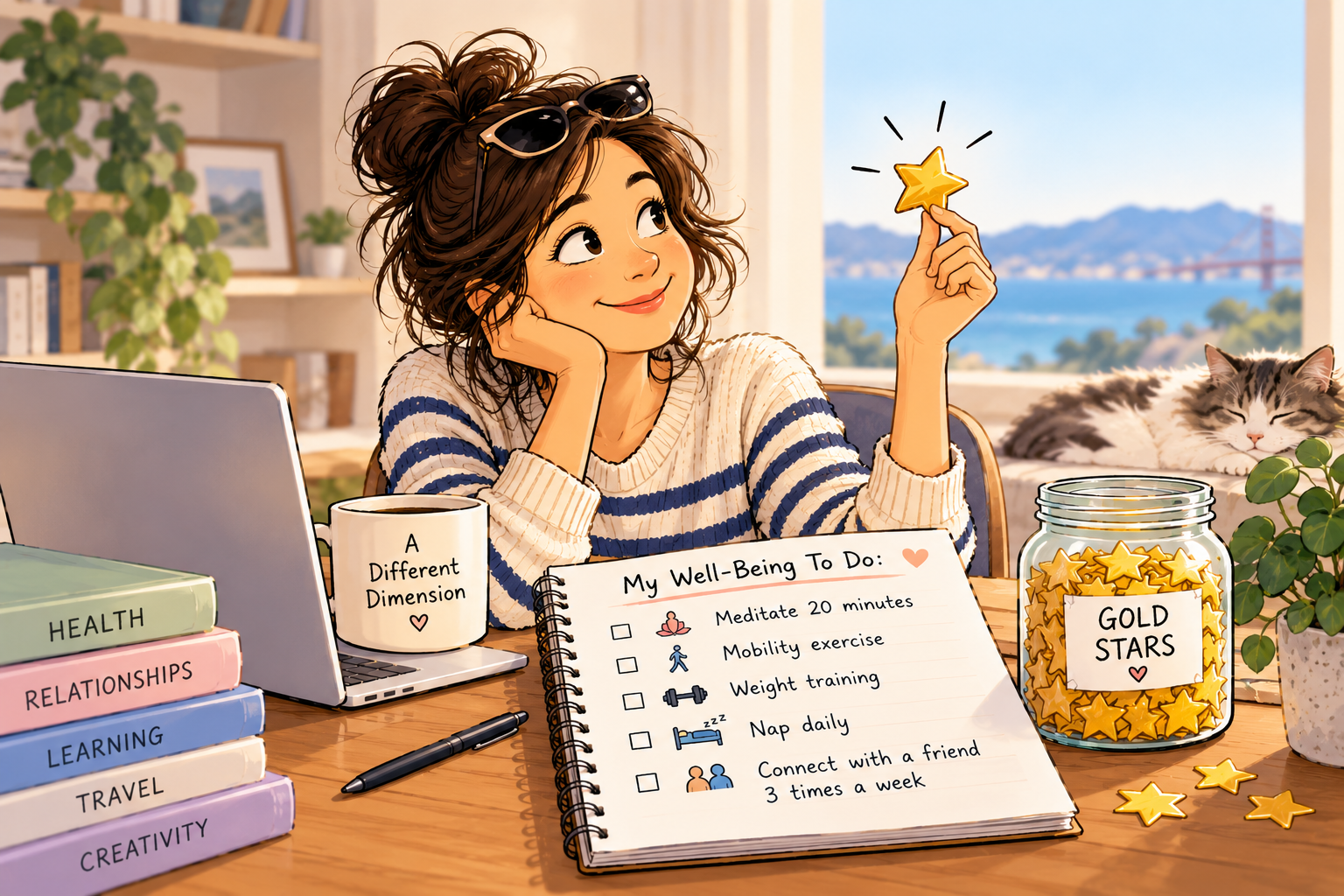
I can completely relate. I still experience that same guilt myself sometimes. We work so hard for decades to earn the freedom to spend our time however we want. But when we finally have that freedom, why is it so hard to enjoy it without feeling like we should be doing something more productive? It’s almost as if we’re still looking around for our next “gold star.”
We’ve Been Collecting “Gold Stars” for Decades
Throughout our professional lives, productivity was rewarded. We worked hard, delivered results, received recognition from colleagues and bosses, got promoted, managed bigger teams, and gained more influence. The more we accomplished, the more people wanted our time and attention.
All those gold stars felt pretty good! Over time, being productive became more than just something we did. It became part of how we measured our worth. We learned to feel good about ourselves when we accomplished things, and perhaps a little guilty when we didn’t.
And honestly, why would we question this mindset? It served us well for decades. It helped us build successful careers and, for some of us, achieve financial freedom.
But then we retire, and suddenly the system that rewarded us for decades is gone.
Welcome to a Different Dimension
I recently started describing early retirement to friends as entering an entirely different dimension. It’s not just changing jobs or taking an extended vacation. It’s stepping into a new universe where many of the familiar rules no longer apply.
- In our old dimension, we had structure, deadlines, responsibilities, and clear measures of success. Even when we complained about the constraints, we knew what was expected of us and how to feel accomplished.
- In this new dimension, we suddenly have tremendous freedom. We can decide how to spend our days, what to pursue, and even what matters to us.
Yet we arrive carrying the same identity and mindset that served us in our professional lives. Without even realizing it, we’re still using the rules of our old universe to measure our worth in this new one.
I recently came across the concept of identity grief, originally in the context of parents adjusting to their children leaving for college. It makes me wonder whether something similar is happening in retirement. Even when we welcome a new chapter, letting go of an identity we’ve held for decades can be surprisingly uncomfortable and take time and effort.
Perhaps that’s part of why early retirement can feel so jarring. Our circumstances change overnight, but our internal measuring system hasn’t caught up.
Learning to Give Myself Different Gold Stars
I know this mismatch well. During my first nine months of retirement, I found myself asking questions like:
- “What am I doing with my life?”
- “Am I still doing something meaningful?
- “Have I been productive enough today?”
None of these questions made me particularly happy. In fact, I was driving myself a little crazy, even grinding my teeth from the tension.
I eventually realized that I was still operating with an internal critic that kept telling me, “I’m not good enough yet.” I wrote about that realization in an earlier article, and how asking myself a different question, “What if what I’m doing is already enough?” began to change my perspective.
But recognizing that pattern was only the beginning. I didn’t want to keep living an achievement-focused life that made me feel like I always needed to do more. After all, I had worked for 30 years and achieved something I’d wanted for a long time: financial freedom. Why was I still making myself miserable trying to prove that I was productive? Didn’t I deserve to enjoy what I’d worked so hard for?
Over the last six months, something has gradually shifted. I no longer automatically judge a day by how much I’ve accomplished. Instead, I’m learning to give myself permission to define what makes a good day.
- Sometimes it’s spending quality time with my husband, kids, or parents.
- Sometimes it’s having a wonderful conversation with a friend.
- Sometimes it’s reading something interesting, learning something new, or enjoying a fantastic afternoon nap.
- And sometimes it’s simply having the freedom to do absolutely nothing.
These days, I can look back on an afternoon like that and genuinely think, “What a wonderful day!” That feels like a gold star, too.
The difference is that I’m learning to give myself those gold stars based on what I actually value, rather than relying on someone else’s definition of what makes a day worthwhile.
Maybe That’s What This New Dimension Is About
I wish I could say that I’ve completely stopped needing gold stars. I haven’t, and perhaps I don’t need to. I’m still someone who enjoys accomplishing things, learning, contributing, and feeling good about my day. Those parts of me haven’t disappeared just because I’ve retired.
What is changing is my relationship with achievement. I’m learning that my old definition of productivity doesn’t need to be the measure of a good day anymore. But I also recognize that this transition takes time and practice. After decades of collecting gold stars from the outside world and checking off endless to-do lists, learning to appreciate a wonderful day on our own terms still feels a little strange.
Maybe that’s one of the unexpected gifts of early retirement. We finally have the freedom to question the very rules we’ve been living by, and to decide which ones we want to keep 😊.
Lei
p.s: If you like what I am writing here, then subscribe to my Substack