A few weeks ago, during a group coaching call, one woman said something that stayed with me. I’ll call her Rachel to protect her privacy.
Rachel is around 40, a first-time mom with a three-year-old, and she’s worked hard for her career. Lately, though, she’s been feeling less motivated at work and dealing with some health challenges. Part of her wants to slow down, maybe take a break or even shift to part-time for a while.
Then she said something that caught my attention: “It just feels wrong to stop now.” That word, wrong. Why would taking care of herself feel wrong?
She talked about cultural and family expectations, motherhood, and the career she had worked so hard for. At the same time, she had started giving herself small permissions: ordering takeout, taking a walk, making space for her own body and mind. Small things, but not small at all.
Who Sits on Your Board of Directors?
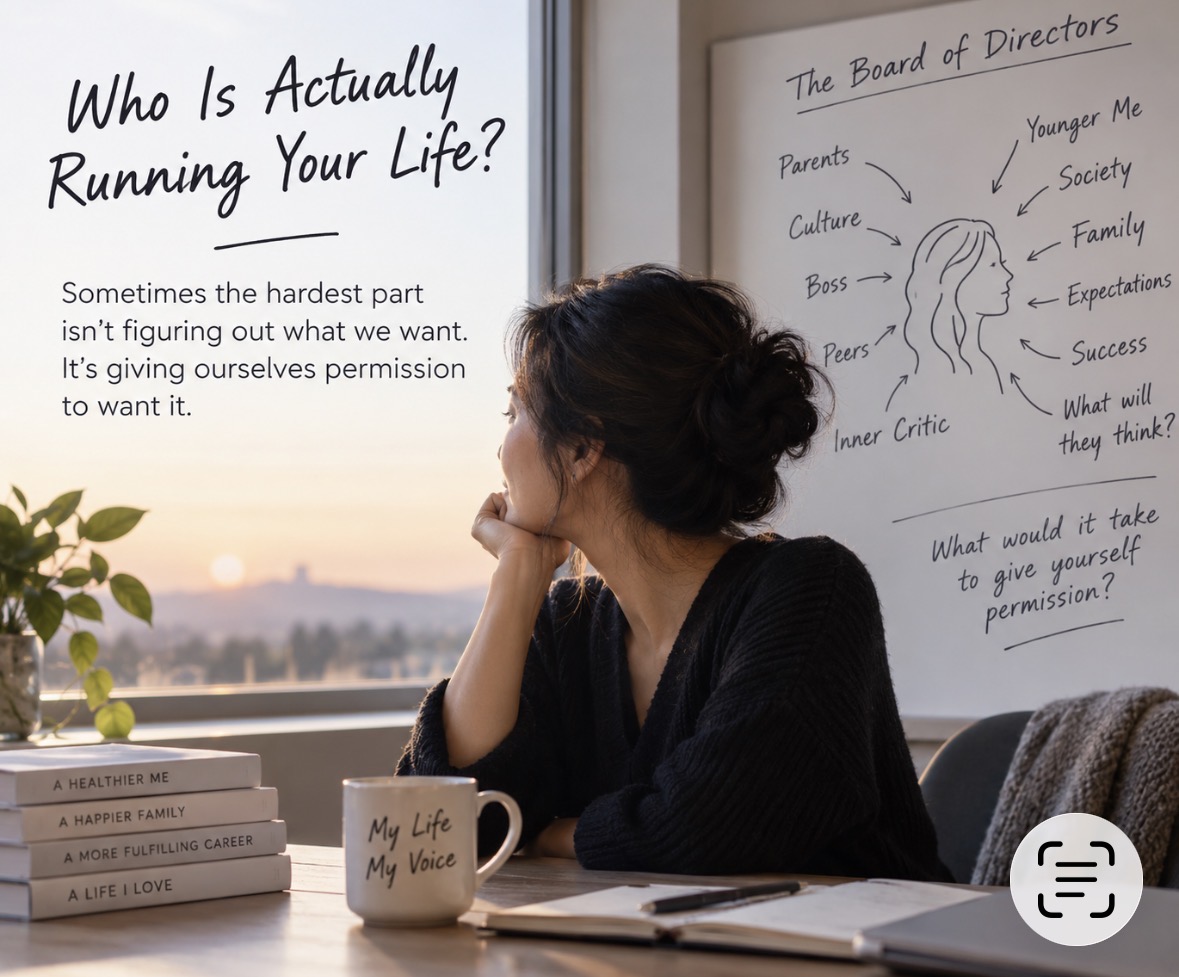 Imagine your well-being is a company. You’re technically the CEO, but who is actually sitting on the board?
Maybe it includes:
- Your parents and the expectations you grew up with
- Your culture and ideas about what a “good” parent, employee, or successful person should do
- Your boss, peers, friends, or spouse
- The people you compare yourself with on LinkedIn or elsewhere
- Your younger self, who decided what success was supposed to look like before you had children, aging parents, health issues, or twenty more years of life experience
Most of us never consciously appointed them. We absorbed their voices and collected more along the way. And when all of those opinions and judgments start echoing inside our heads, that can sound like our inner critic.
In a way, the inner critic isn’t one more board member. It’s the chorus of all of them.
I Know This Board Well
For much of my career, I thought I was making my own decisions. Looking back, I’m not so sure.
My father’s expectations definitely had a seat at my table. So did the desire to have something impressive to say about what I was doing next, something I could put on LinkedIn or mention in conversation and feel proud of. There was always another accomplishment that might prove I was still successful, still relevant, still moving forward.
Even after I injured myself badly in my early 30s from pushing too hard at work, many of those voices stayed. I’ve learned to say no more often and protect my health, but the pressure hasn’t completely disappeared.
Since leaving full-time work, I’ve had days when I simply wanted to rest in the middle of the day or do nothing productive. I didn’t realize how much internal permission that required. No boss was telling me I couldn’t. No deadline was forcing me. The pressure was inside my head.
Giving Yourself Permission Is the Hard Part
That coaching conversation reminded me that knowing what you want and giving yourself permission to want it are not the same thing.
We ask tactical questions: Should I quit? Shift to part-time? Push through? Take the promotion? Take a break?
But underneath those questions is often something deeper: Do I have permission to choose what I actually want if other people might not understand it?
No one else can really answer that for us.
Maybe the Board Needs to Change
We all have responsibilities and people we care about. But every once in a while, it may be worth asking who still deserves a vote in how we live now, and how much weight that vote should carry.
I’m still working on this, so I’m curious how it lands for you. Who is on your internal board right now? And if you gave yourself a little more permission, what might you do differently?
I’d love to hear your thoughts. Subscribe to my Substack and leave a comment there