Since leaving full-time work last April, people often ask me, “How is retirement going?”
I usually pause before answering. I think people expect me to say, “It’s great.” And in many ways, it is. I’ve traveled more, spent more time with my family, and had the luxury of deciding how I want to spend most of my days. I’ve also tried to take better care of myself, although my recent flare-up might suggest I still have some work to do on that one.
But “it’s great” never feels like the whole answer.
The truth is, retirement has been more complicated than I expected. Some days I love having very little on my calendar. Other days, the openness of my calendar makes me strangely uncomfortable. After spending 30 years knowing what I was supposed to be doing, I suddenly have to decide for myself what makes a day meaningful.
I thought that kind of freedom would come naturally. It hasn’t.
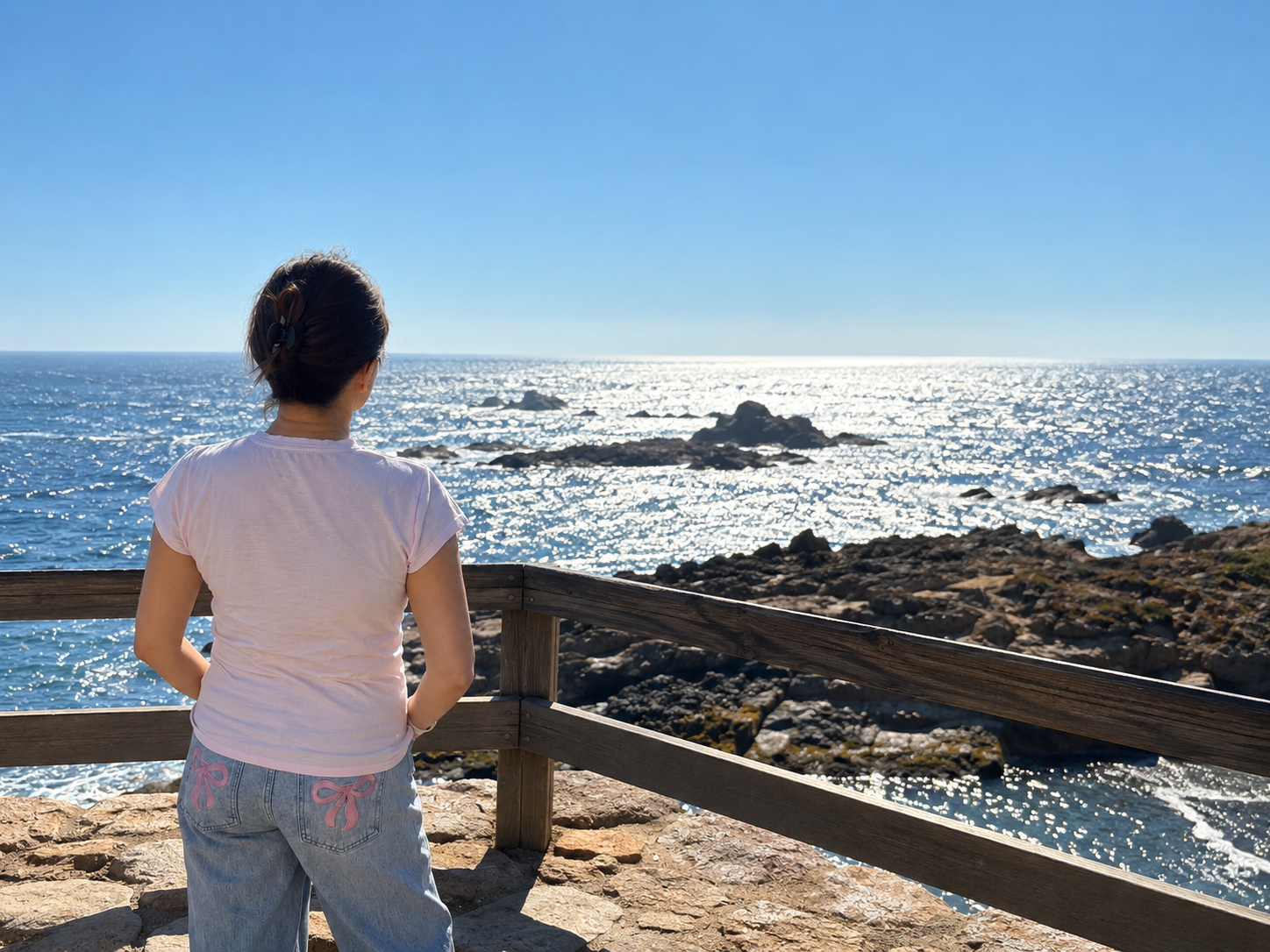
I’m beginning to realize that learning how to live with this much freedom may be one of the hardest and most interesting parts of retirement, especially since I retired early and most people around me are still working.
What If I Retire Too Early?
I recently had lunch with a friend who has been financially independent for more than two years. She doesn’t need to work, but she still has a full-time job.
She’s good at her job, likes the people she works with, and is well compensated, although it’s still just a job. One of her biggest fears about retirement is boredom. What if she leaves her job and realizes she retired too early? What if she regrets it?
I completely understand the fear. When work has filled so much of my time and provided so much structure for decades, the idea of suddenly having nowhere I need to be can feel both freeing and unsettling.
Her question stayed with me because I’ve wondered about boredom too. But lately I’ve started asking myself a different question: What if boredom isn’t necessarily something I need to avoid?
The Four Phases of Retirement
About a year after I stopped working full-time, another friend told me about a framework for retirement that she had learned from a book. She described four phases:
- Catch up with life. Rest, travel, spend time with people I care about, and do the things work didn’t leave enough room for.
- Be lost and confused. Live without the old structure long enough to figure out who I am and what I actually want.
- Experiment. Try different interests, learn, volunteer, create, and see what fits.
- Settle into what fits. Build my days around what I’ve learned feels meaningful.
She also told me something I loved. Phase four isn’t necessarily the end. What fits today may stop fitting a few years from now, and I can start the cycle again.
I don’t know that everyone experiences retirement in exactly these four phases, but I loved the framework because it gave structure to something that had felt surprisingly unstructured.
It also made me laugh. I realized I had been trying to do phases one, two, and three at the same time.
I Was Rushing Through My Own Freedom
When I left work, I wanted to catch up with life. I wanted to travel, spend more time with my family, take care of my health, and simply have more space in my days.
Apparently, I wasn’t comfortable just doing that.
Almost immediately, I started asking myself: What am I passionate about? How do I want to spend my time? What will make this stage of my life meaningful?
Then came the experiments. I helped nonprofits, explored AI, talked to people about volunteering with their venture funds, and started thinking more seriously about coaching and writing.
Some of those experiments have been valuable. But looking back, I can see something else was driving me too. I wanted a good answer when someone asked, “So what are you doing now?”
After spending 30 years building a career, I wasn’t used to saying, I’m not sure yet. I wanted to be doing something interesting, productive, or relevant. Something that made it sound like I was still going somewhere.
I had stopped working, but I hadn’t stopped feeling the need to prove that I was using my time well.
Maybe Being Lost and Confused Is Exactly Where I’m Supposed to Be
That’s why the second phase has stayed with me. At first, “be lost and confused” didn’t sound particularly appealing. I worked for decades to have more choices about how I spend my life, only to arrive at lost and confused?
Now I’m starting to see it differently. Maybe being lost isn’t a problem I need to fix. Maybe it’s what happens when the old answers no longer apply and the new ones haven’t emerged yet.
It has also changed how I think about my friend’s fear of boredom. For most of my adult life, I rarely had to decide what to do with an empty Tuesday afternoon, much less the next several years. Work filled that space for me.
I’m starting to think the empty space may be valuable. If I fill it too quickly because it makes me uncomfortable, I may never discover what actually makes me happy, what feels meaningful now, or simply how I want to spend my days.
Maybe that’s the gift hidden inside being lost and confused. I have an opportunity to question assumptions I’ve lived with for decades and learn something new about myself.
My friend also reminded me that there is no prescribed amount of time for any of these phases.
“How long am I allowed to stay in phase one?” I asked her.
“As long as you want,” she said. “Five months. Five years. There is no deadline.”
That sounds obvious, but it didn’t feel obvious to me. School had a timeline. My career had a timeline. Raising children has milestones. Even retirement is traditionally attached to an age.
For perhaps the first time in my adult life, there isn’t a timeline unless I create one.
Giving Myself Permission Not to Know
I’ve written before about how much internal permission it can take to live differently, even when no one else is stopping me. I’m realizing retirement requires its own kind of permission.
I’m actually still doing a lot of catching up with life. I’m writing, learning, spending time with people I care about, and experimenting when I feel like it. But I’m also learning to be okay with a very calm day when there isn’t much to do.
After decades of being productive and having full days, my instinct is still to fill the empty space. I’m learning instead to go more with the flow of life and take all of this more lightly.
That includes giving myself permission not to have an impressive answer when someone asks what I’m doing now. Every interest doesn’t need a purpose, and every experiment doesn’t need to become something productive. The boredom, uncertainty, and even confusion give me room to rethink what makes me happy and how I actually want to spend my time.
If you like what I am writing here, Subscribe to my Substack
I am always in your corner
Lei
so helpful to read through this. i am feeling the same!