I used to think meditation was a waste of time—and definitely not for someone like me. When I felt overwhelmed, I’d run, dance, or work out. Sweating it out always helped reset my mood. Sitting still? Focusing on my breath while my brain bounced between to-do lists and worries? No thanks.
 But eventually, I realized something: while workouts helped in the moment, they didn’t create lasting calm. And in stressful work situations, I couldn’t exactly run out the door for a jog. I needed a way to reset in the moment.
So I kept trying. Over the last few years, I’ve found a version of meditation that works for me. I’m sharing what helped—plus a few powerful metaphors my friend David shared over dinner. He’s meditated daily for years, and his insights gave me an even deeper understanding of why this practice matters and how to stick with it when it feels hard.
The Mental “Twitter Feed” in Your Head
David shared a metaphor that really stuck with me: your mind is like a never-ending Twitter feed. Not the fun kind—this is relentless chatter. Worries, planning, second-guessing—all scrolling by nonstop.
This feed doesn’t pause, even when you sleep. It’s like a mental tax you’re paying without realizing it. And without meditation, that tax piles up—making you reactive, distracted, and easily overwhelmed.
Meditation doesn’t erase the feed—but it quiets it. The mental noise dials down from 80% to 60%, while your sense of calm goes up. Suddenly, you have more space. More perspective. And more choice in how you respond.
Why Meditation Feels So Hard (And Why That’s Normal)
My early attempts at meditating were frustrating. I couldn’t sit still. I kept checking the timer. My thoughts ran wild. I assumed I was just bad at it.
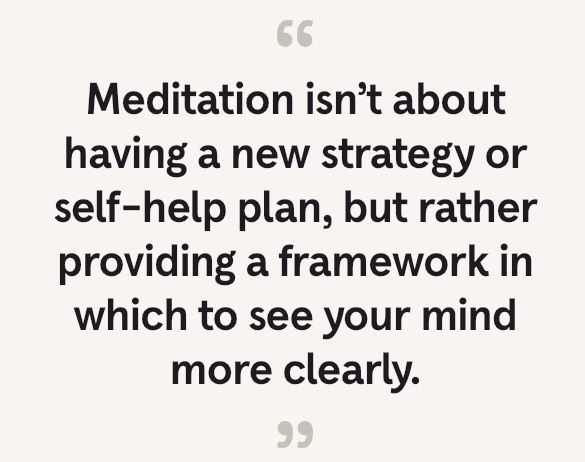
David reminded me: that’s normal. Meditation isn’t about stopping thoughts—it’s about seeing them. Like any muscle, your mind gets stronger with practice. You start small and build over time.
He began with five minutes, no app—just noticing. And yes, for weeks, his inner monologue sounded like:
“This is dumb. What am I doing? Oh no, I forgot to reply to that email… How much longer?”
But he kept going—and so did I.
The “Chairs” Metaphor That Changed Everything
One metaphor that really helped me was David’s “mental chairs.” Think of each thought or emotion as a guest in your home. Meditation is about giving each guest a chair to sit in. Instead of resisting them, you acknowledge them:
- Ah, Work Stress—take a seat.
- Hi, Guilt—here’s your chair.
- Disappointment, Family Drama, Ambition—chairs for all of you too.
When you stop fighting them, they stop dominating your attention. Some eventually leave. Others quiet down. You see them, but you don’t become them. I am now also using this method. It has made it easier for me to let go of highly emotional thoughts.
How Meditation Helps at Work (Yes, Really)
Meditation isn’t just about feeling calm—it’s about being more intentional and grounded in how you show up. With regular practice, you start to:
- Notice your triggers before reacting
- Pause and respond with clarity
- Manage stress in real time (not just after hours)
- Make more space for creativity, empathy, and focus
David said it best: when someone pushes your buttons, you don’t snap back. You pause. You wonder what’s going on for them. That’s a superpower in leadership—and in life.
Getting Started: What Helped Me Find My Way
It took some experimenting, but I finally found a rhythm that worked. Here’s what helped:
-
I found a guided app that clicked—Headspace.
The founder Andy’s voice is calming, and I like that he opens each session with a short insight. It gives me something to focus on beyond just “clearing my mind.” Here is an example for yesterday’s meditation. Plus, I can choose a meditation length that fits my day—3, 5, 10, or 15 minutes. -
I took a 6-week mental fitness course through Positive Intelligence.
It helped me understand my stress responses and introduced short exercises called PQ reps—2, 5, or 12-minute practices I now use when I need to reset quickly. -
I let go of the idea that it should feel peaceful right away.
Some days, I feel bored or distracted—and that’s okay. The goal isn’t perfection; it’s simply showing up. -
I started observing my thoughts instead of fighting them.
The “chairs” metaphor helped me stop judging what came up. I could just notice it and move on. -
I committed to consistency over intensity.
Even just 5–10 minutes a day made a difference. The clarity and calm didn’t come overnight—but it came.
Some days are still messy. But the difference in how I handle stress, make decisions, and relate to others is real.
Final Thoughts: You Don’t Have to Be Good at This
If you take one thing from this, let it be this: meditation isn’t about being good at it. It’s about showing up.
You’re not failing if your mind is busy. You’re not doing it wrong if you get distracted. You’re training your mind—just like a puppy. Gently. Repeatedly.
And if you’re ready to start, here are three simple options:
-
No app? No problem. Set a timer for 3 minutes. Use the mantra “I am” and focus on your breath. That’s how David started—and still does his daily 20-minute practice.
-
Want guidance? Try the Headspace app. Here’s a free 30-day pass. Start with the 1-minute breathing exercise or the “Meditation of the Day.” Andy will guide you through it.
-
Want to go deeper? Consider the Positive Intelligence Mental Fitness course. It offers a 6-week framework to shift your relationship with stress, judgment, and self-doubt. I offer this course once a year and also host free seminars. If you’re interested, email me at leihansf@gmail.com.
Start small. Be consistent. And give yourself grace. Because once you experience the clarity and calm that meditation creates—not just in your mind but in your work and relationships—you won’t want to go back.
I look forward to your questions and comments
Lei
[…] the inner peace side, meditation has been a game-changer. I’ve meditated nearly every day for the past two months. It’s not about the streak; it’s […]
In such a fast-paced world, I can imagine the value of sitting with myself and my thoughts for at least a few minutes daily. This is great, thanks Lei!!
Kalli, thanks for commenting and glad this was helpful. 🙂